
Toxic Love: Dark Boyfriends
KARAAGE GAMES LLC.Simulation
4.274.00 Reviews
- Version
- 1.1.3
- Installs
- 100.00K
- Age Rating
- Mature 17+
Screenshots
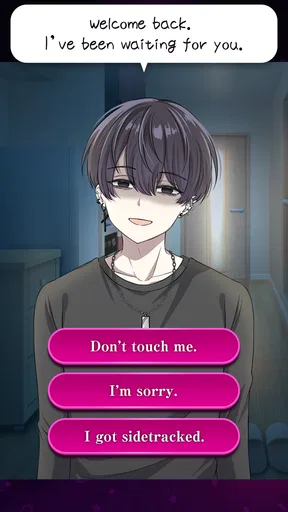
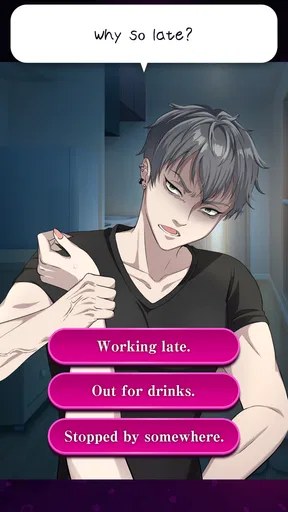
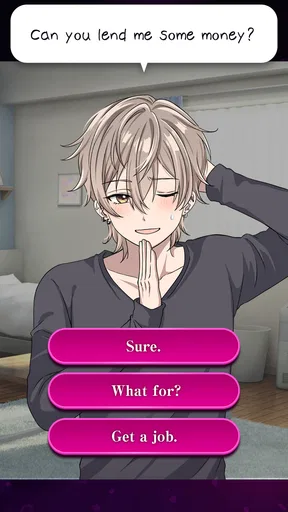
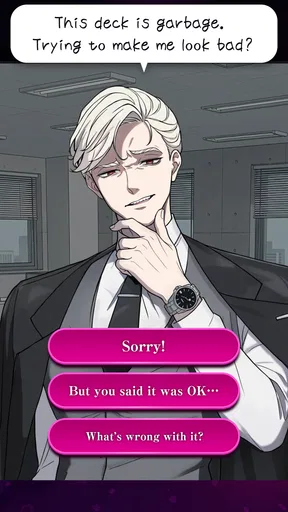
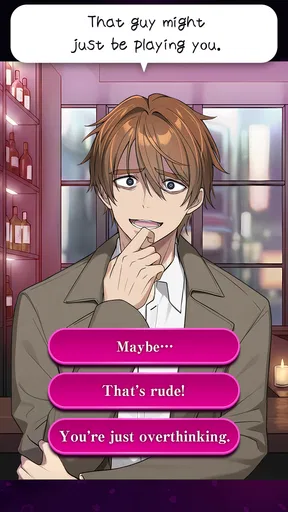
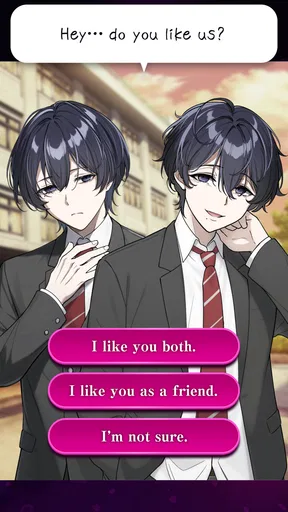
Our Review of Toxic Love: Dark Boyfriends
 Analysis by Appyee
Toxic Love: Dark Boyfriends is the kind of simulation game that makes its first impression through mood rather than spectacle. Its premise is immediately clear: attractive men, complicated feelings, and secrets that turn romance into something more uneasy. I went in expecting a character-focused experience built around emotional tension, and that is exactly where the game’s identity seems strongest. It is not trying to be a broad life simulator or a competitive game. Instead, it narrows its attention to toxic romance and the curiosity of finding out what is hidden beneath a polished surface.
That focus gives the game a distinct place among mobile simulation titles. The store summary, “Hot guys... all with secrets!?”, points toward the central hook without explaining everything, while the short description, “Toxic Love,” sets a darker tone than a standard dating game. I would recommend it to players who enjoy relationship-driven stories, suspicious characters, and a dramatic atmosphere. I would be more cautious with it if you prefer cheerful romance, open-ended management, or gameplay that depends mostly on reflexes.
How the presentation turns romance into a warning sign
The strongest idea here is the contrast between attraction and danger. A conventional romance game often presents its characters as people to understand and support. This game makes the player question that instinct. The appeal of each boyfriend is part of the problem: the more inviting a character appears, the more interesting it becomes to look for the behavior, history, or secret that complicates the relationship.
That approach gives the setting a useful emotional language. Instead of treating romance as a simple reward path, the game frames it as a space where charm can conceal risk. Even before considering individual scenes or choices, that premise changes how I read the characters. A friendly exchange is not automatically comforting, and a dramatic moment is not necessarily a failure. The tension comes from wondering whether affection is leading somewhere healthy or pulling the player deeper into trouble.
For me, this is where the art direction matters most. A dark romance game needs more than attractive character designs. It needs visual cues that support uncertainty, such as guarded expressions, uncomfortable pauses, or environments that make private conversations feel more significant. When those elements work together, the screen communicates a question before the dialogue answers it: should I trust this person?
Players should also understand what sort of emotional experience they are choosing. The mature rating of 17+ is an important part of the game’s identity, not a minor label to overlook. The themes are aimed at an older audience, and the tone is built around unhealthy relationship dynamics rather than harmless flirting. I would not treat this as a casual game for a shared family device or as a light romance to play without considering its subject matter.
A setting designed for suspicion
The setting works best when it gives the player room to interpret behavior. In this kind of story, a conversation is rarely only about the words on screen. The surrounding mood, the character’s presentation, and the timing of a reveal all influence whether a scene feels intimate, manipulative, or threatening. That makes the game’s world less about exploring a large map and more about reading social spaces carefully.
One practical way to approach it is to slow down during important conversations instead of tapping through them as quickly as possible. I found that the emotional effect depends on noticing how a scene is framed. If I rush through every exchange, the story becomes a sequence of romantic prompts. If I pay attention to the tone and keep the central premise in mind, the same interactions feel more like evidence in a mystery.
That is also a useful tip for players who want more from the narrative: do not judge a character only by the most charming scene. In a game built around secrets, consistency matters more than a single impressive moment. Watch for changes in attitude and for the gap between what a character says and what the situation suggests. This turns the player from a passive admirer into an active reader of the story.
The trade-off is that a focused setting may feel narrow to anyone expecting a large simulation sandbox. There is no reason to approach this as a substitute for a life-management game with many systems, schedules, or practical tasks. Its world is valuable because it concentrates attention on romantic tension. If you want a broad routine simulator, a more traditional simulation title will probably offer greater variety. If you want a contained atmosphere where every relationship detail carries weight, this narrower design is an advantage.
Sound, pauses, and the pace of unease
Sound is especially important in a romance game with a darker edge. Music and effects do not merely decorate a scene; they tell me how much trust to place in what I am seeing. A warm musical passage can make a character feel safe, while a quieter or more uncomfortable transition can make the same relationship seem unstable. The best moments come when the audio leaves enough space for doubt instead of forcing a dramatic reaction.
Pacing has a similar job. Toxic romance is rarely effective when every scene is loud and urgent. Suspicion needs time to build. A pause before a response, a delayed explanation, or a gradual change in a character’s behavior can create more tension than an immediate shock. I prefer when the game allows those small signals to accumulate, because the player then feels responsible for noticing the danger rather than simply being told that a scene is dangerous.
This slower rhythm may not suit everyone. Players who want constant progress can find relationship scenes too deliberate, especially when the appeal comes from atmosphere and interpretation rather than rapid mechanical rewards. My advice is to play in short, focused sessions. That makes it easier to remember who said what, notice changes in tone, and keep the emotional thread intact. It also prevents the darker mood from becoming tiring during a long sitting.
A realistic everyday use case would be playing a few scenes after work or before bed when I want something story-led but not physically demanding. I would not choose it for a quick game during a short commute if I knew I might need to stop in the middle of an important exchange. The experience benefits from attention, and interruptions can flatten the tension that the presentation is trying to build.
Where the simulation label fits
Calling this a simulation game makes sense in the sense that the player is engaging with a relationship situation and its consequences, rather than controlling a traditional action hero. The central activity is interpreting people and participating in a romantic scenario. That makes the game closer to a character-based relationship simulation than to a construction, farming, or vehicle simulator.
Its mechanics need to support that emotional purpose. Choices should feel meaningful because they reveal character dynamics, not merely because they unlock a numerical reward. The most satisfying interaction is one that makes me reconsider a person I thought I understood. A decision has value when it changes my reading of the relationship, even if the immediate result is subtle.
There is a useful trade-off here. A tightly focused relationship game can make individual choices feel more personal, but it can also feel less mechanically rich than a simulation filled with inventories, upgrades, crafting, or resource planning. Players who measure depth by the number of systems may find the concept limited. Players who measure depth by the quality of emotional uncertainty may appreciate the restraint.
I would approach the game with a simple strategy: keep track of the characters’ behavior, avoid assuming that affection equals safety, and treat each new revelation as part of a larger pattern. That mindset is more useful than trying to optimize every interaction immediately. It also helps preserve the suspense, because the player is making judgments rather than simply searching for the fastest route to a preferred outcome.
Another practical consideration is spending. The game is free to download, with in-app purchases ranging from $1.90 to $5.99 per item. That makes it easy to try the core experience before deciding whether it deserves further spending. I would set a personal limit before buying anything, particularly because story-driven games can make a player feel impatient to reach the next reveal. The best test is whether the narrative and atmosphere already hold your attention without pressure to purchase.
The game is currently at version 1.1.3 and requires Android 10 or later. That is worth checking before downloading, especially if the phone is older or has limited software support. On compatible devices, the free entry point lowers the risk of trying it, but the mature tone should be considered just as carefully as the technical requirement.
Who will connect with the mood, and who should skip it
I think the game is best suited to players who enjoy romance with a suspicious edge. If you like studying character behavior, questioning charming personalities, and letting a story reveal its darker side gradually, the concept has a clear appeal. It is also a good choice for someone who wants a mobile game that can create a strong mood without requiring fast controls or a complicated strategy system.
It is less suitable for players who want uncomplicated comfort. The mature rating and toxic relationship theme are not decorative details; they define the emotional experience. Anyone looking for wholesome dating, comedy, or a relaxed social simulator should choose something else. The same applies to players who dislike stories where the player may be encouraged to remain close to a troubling character in order to understand the situation.
I would also skip it if my priority were competitive play, extensive customization, or a large world to explore. This is a focused narrative simulation, not a replacement for a multiplayer game or a traditional sandbox. Its value depends on whether the player enjoys the atmosphere created by the characters and their secrets.
The developer, KARAAGE GAMES LLC., has positioned the project around a very specific fantasy: romance that is attractive on the surface but unsettling underneath. That specificity is a strength because the game does not feel confused about its intended mood. It is also a limitation because there is less room for players who want several unrelated play styles in one package.
What the audience response suggests
The game holds an average rating of 4.2 from around 2.5 thousand ratings, with roughly 74 written reviews. It has passed 100 thousand installs, which suggests that the unusual romance premise has reached a meaningful mobile audience. I would read those figures as signs of interest rather than proof that every player will enjoy the same pacing or tone.
Ratings are particularly easy to misread with a story-focused game. A player may appreciate the art and characters while disliking the darker subject matter, or enjoy the premise but want more mechanical variety. Before installing, I would ask myself which part matters most: the emotional atmosphere, the romance setup, or the simulation label. The answer will determine whether the game feels focused or restrictive.
One of the less obvious strengths is that the game can work as a conversation starter about fictional relationship patterns. It gives players a reason to question why a character is appealing and where the boundary lies between mystery and manipulation. That does not make the subject comfortable, but it does make the experience more thoughtful than a simple collection of romantic scenes.
Another limitation is that dark themes can lose their effect if the player becomes accustomed to constant suspicion. The game’s mood depends on contrast: moments of attraction need enough warmth for later discomfort to matter. If every character seems immediately dangerous, the mystery can become predictable. I would judge the pacing by whether the game gives me reasons to revise my opinion, not merely repeat the same warning.
My verdict on the complete atmosphere
What makes Toxic Love: Dark Boyfriends interesting is the way its art direction, sound, setting, and pacing all point toward the same emotional question: can attraction be trusted? The simulation framework keeps the focus on relationships, while the mature presentation prevents those relationships from feeling entirely safe or simple. When the game allows uncertainty to develop gradually, its central idea becomes much more effective.
I would recommend it to an adult player who wants a compact, character-centered romance game with a darker mood and who is comfortable paying attention to subtext. I would not recommend it to someone seeking cheerful romance, broad simulation mechanics, or a game that can be enjoyed casually with the sound off and the dialogue rushed.
The free price makes trying it straightforward, but I would still approach the optional purchases patiently and check the Android requirement first. Give the game a few focused sessions, notice how the characters’ behavior changes, and decide whether the atmosphere is doing enough to justify continuing. The key is to treat every charming moment as part of the mystery, not as automatic proof of a healthy relationship.
In the end, this is a specialized simulation built around mood and emotional suspicion. Its success depends less on offering endless activities and more on making the player want to understand people who may not be safe to trust. For the right audience, that narrow focus is exactly what gives it personality. For everyone else, the darker premise and deliberate rhythm are clear reasons to look for a lighter or more mechanically expansive alternative.
Verdict
Strengths of Toxic Love: Dark Boyfriends
- Short episodes make it easy to play during quick breaks.
- Multiple romance routes encourage replaying the story.
- Dark themes create a tense, dramatic atmosphere.
- Character choices can change relationship outcomes.
- Stylized character art suits fans of gothic romance.
Limitations of Toxic Love: Dark Boyfriends
- Some scenes may feel uncomfortable due to controlling behavior.
- The story contains mature themes unsuitable for younger players.
- Progress can depend heavily on reading rather than gameplay.
- Certain routes may require repeated playthroughs to unlock.
- The intense tone may not appeal to players seeking light romance.
Other Releases by KARAAGE GAMES LLC.
View All
Everyday Chills:Hidden Horrors
Trivia3.6

Patrol Time! Instant Arrest!
Simulation4.3
Similar Picks in This Category
View All
Truckers of Europe 3
Wanda Software4.3

Town Building Life Simulator
XGame Global4.2

Fidget Toys Trading・Pop It 3D
Freeplay Inc4.7

Sculpt People
CrazyLabs LTD4.4

Scary Teacher 3D
Z & K Games4.2

Hair Tattoo: Barber Shop Game
CASUAL AZUR GAMES4.3
Frequently Asked Questions
What is Toxic Love: Dark Boyfriends about?
Toxic Love: Dark Boyfriends is a dark romance, interactive story, and dating-simulation game built around intense relationships with mysterious male characters. As you progress, you read story chapters, make dialogue choices, and learn more about each character’s personality, secrets, and motives. The narrative focuses on dramatic romance, emotional tension, and potentially unhealthy relationship dynamics rather than a lighthearted dating experience.
Is Toxic Love: Dark Boyfriends suitable for all ages?
The game is generally aimed at mature teenagers and adults because its themes can include toxic relationships, manipulation, jealousy, emotional conflict, danger, and psychologically intense romance. Some scenes or dialogue may be uncomfortable for younger players or anyone sensitive to dark relationship topics. Before downloading, check the current age rating, content labels, and store description, as the exact material and rating may vary by platform or region.
How does the gameplay work?
Most of the experience is based on reading interactive story sections and choosing responses during important conversations. Your decisions can influence character reactions, romantic development, and the direction of certain scenes. Progress may also involve waiting for story content, using in-game resources, or completing simple tasks. It is best suited to players who enjoy visual-novel storytelling and character drama rather than action-heavy gameplay or complex strategy systems.
Does Toxic Love: Dark Boyfriends require an internet connection or in-app purchases?
An internet connection may be needed for the initial download, account-related features, advertisements, event content, or access to new chapters. The game may also include optional in-app purchases for premium choices, faster progression, special items, or additional story content. You should review the Google Play or App Store listing before installing and check the purchase settings on your device, especially if children can access the application.
Is Toxic Love: Dark Boyfriends free to download and play?
The application may be available as a free download, but free access does not necessarily mean that every chapter, choice, or feature is included without restrictions. Many story-based romance games use advertisements, energy systems, tickets, timed progression, or premium currency to unlock content. You can usually begin without paying, but players who want faster progress or every romantic route may encounter optional purchases during the experience.
Play our best games!


